
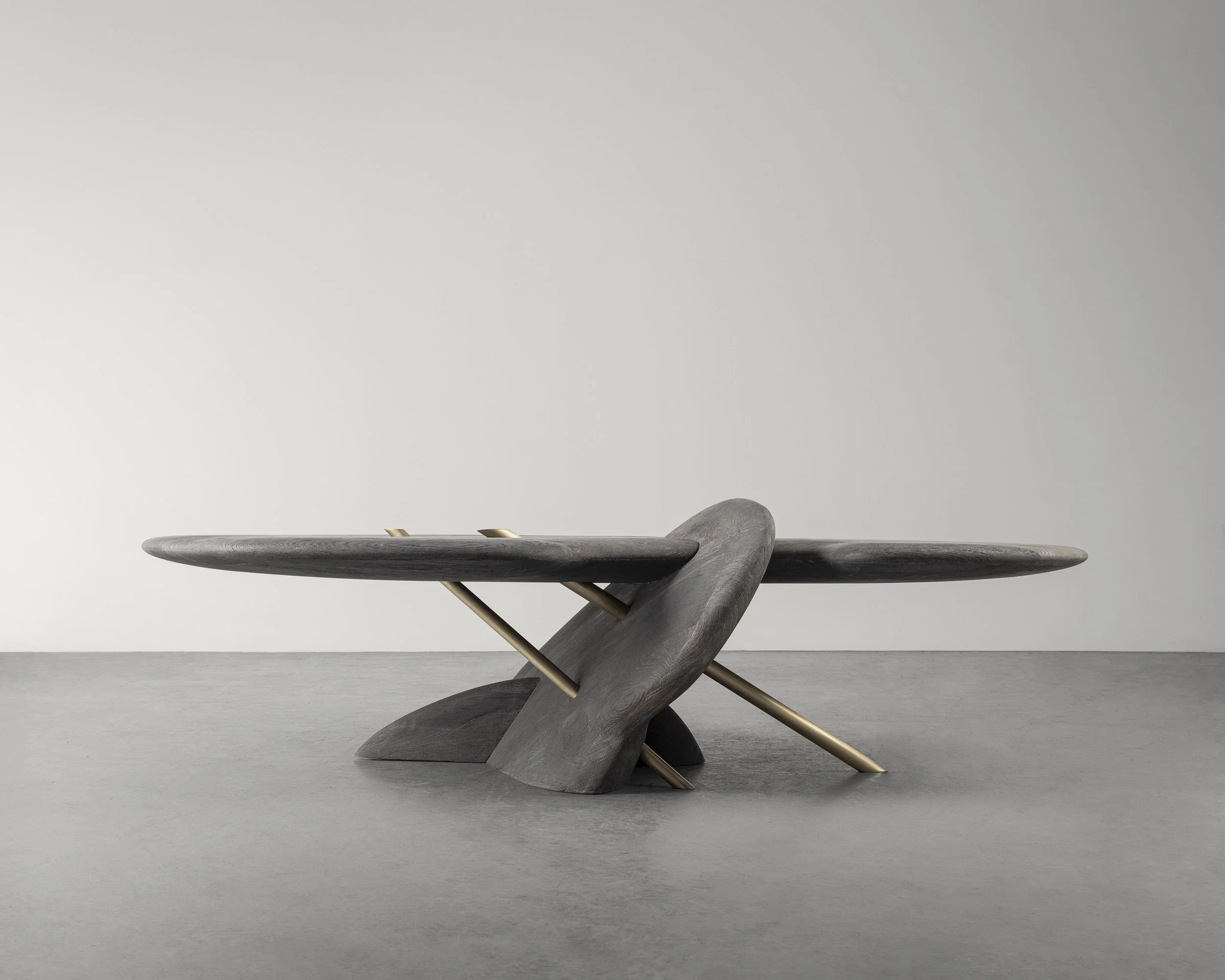
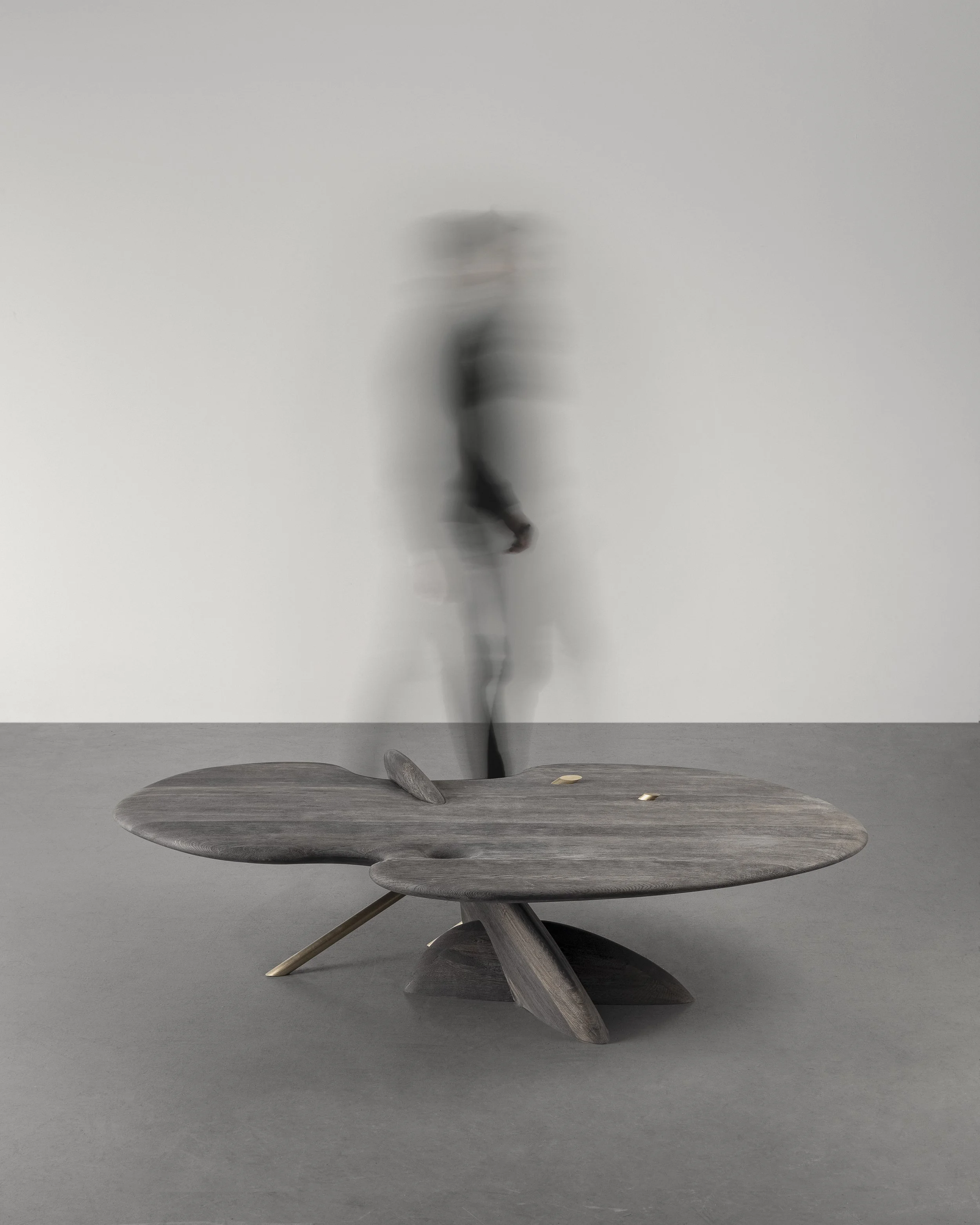
Fuse V
2022
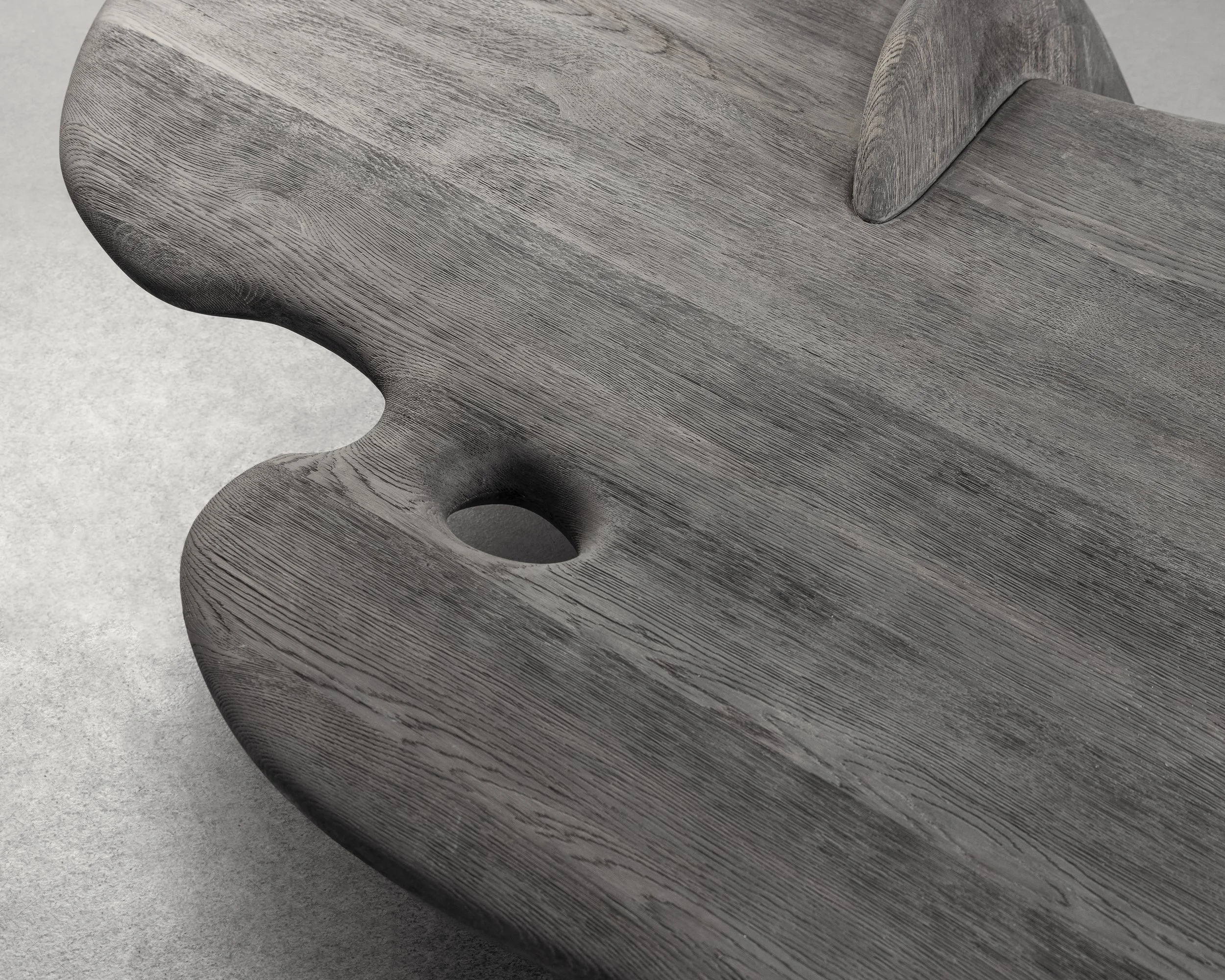
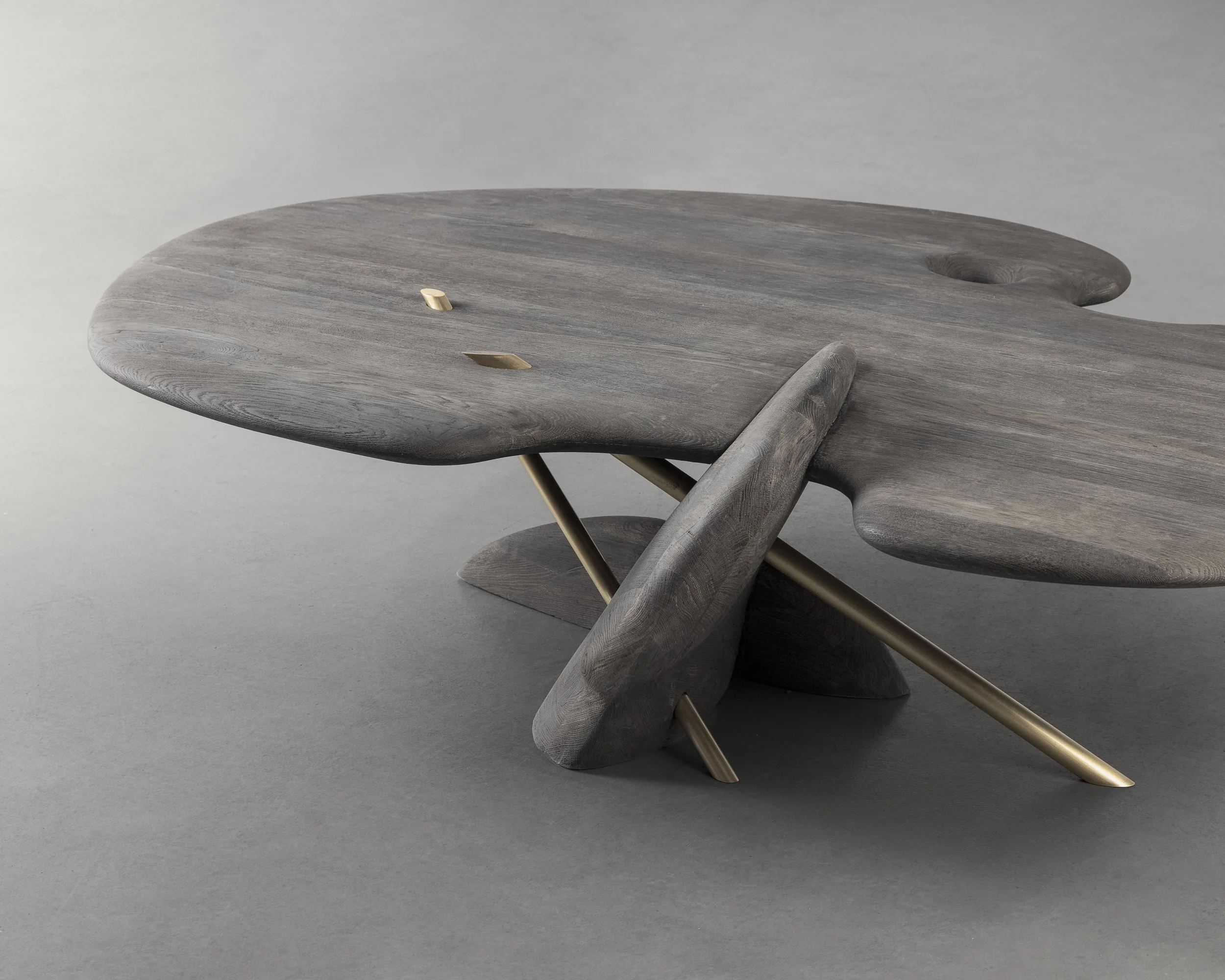
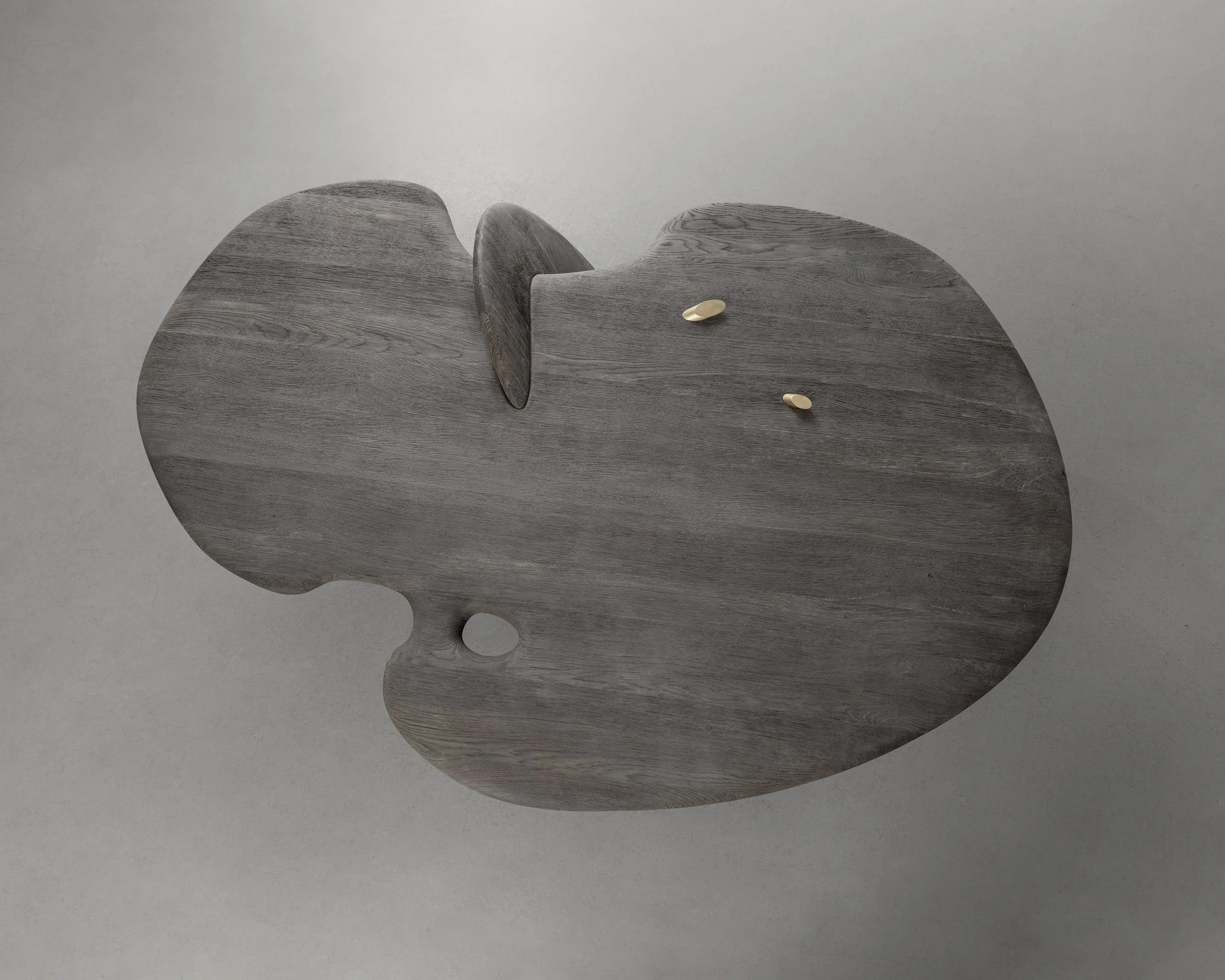
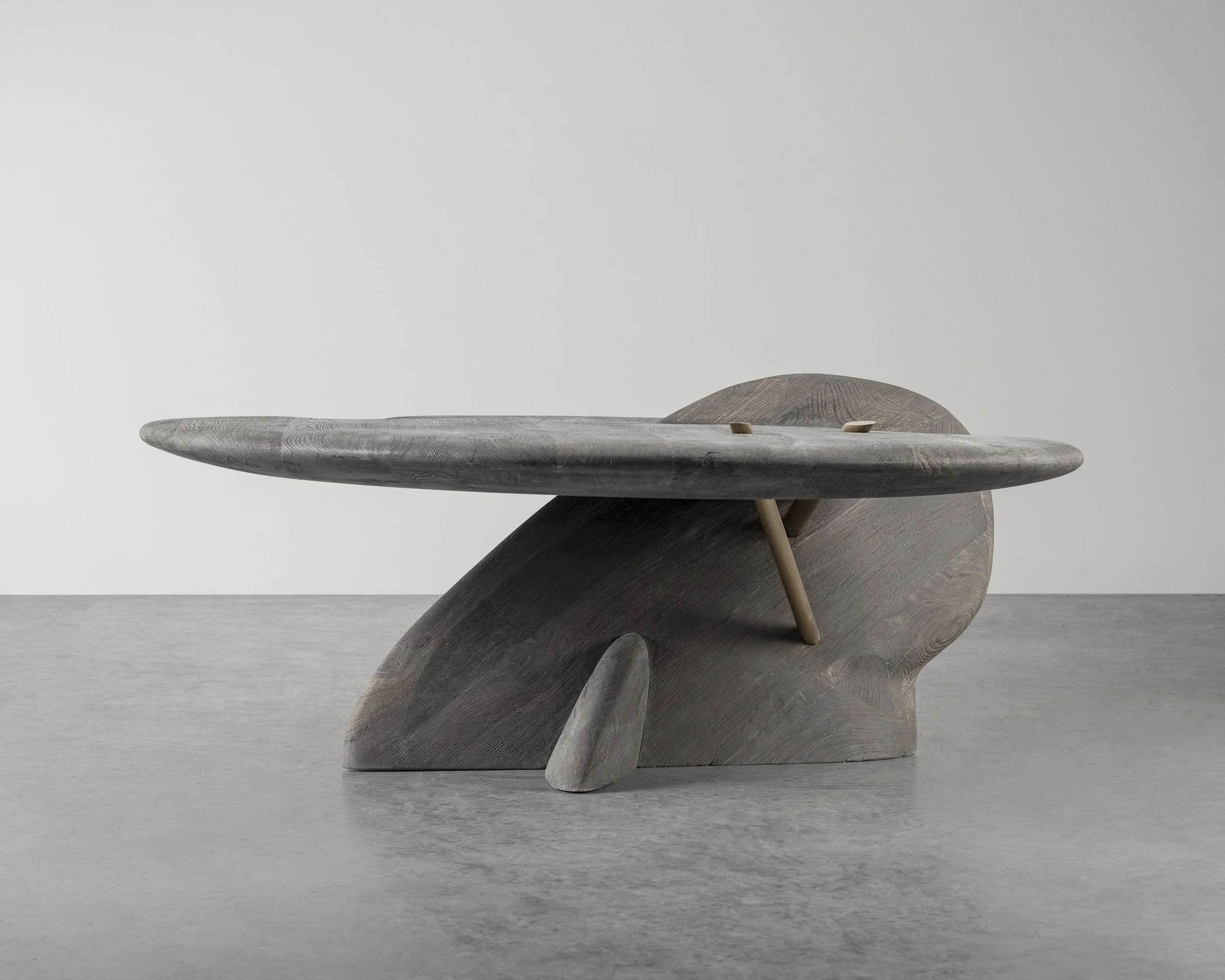
Bog Oak, Brass
48.4 x 169.4 x 116.5 cm
19 1/8 x 66 3/4 x 45 7/8 in
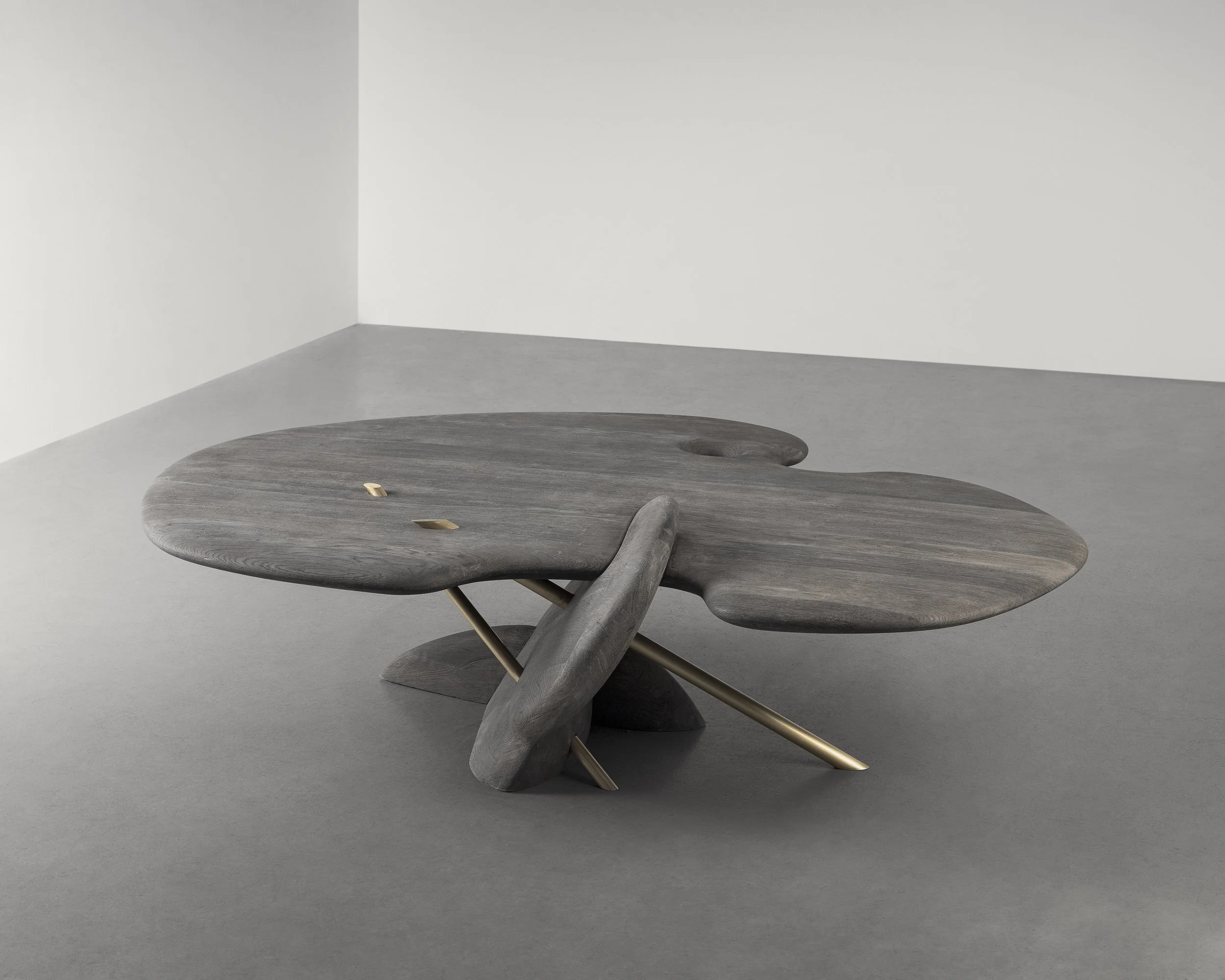
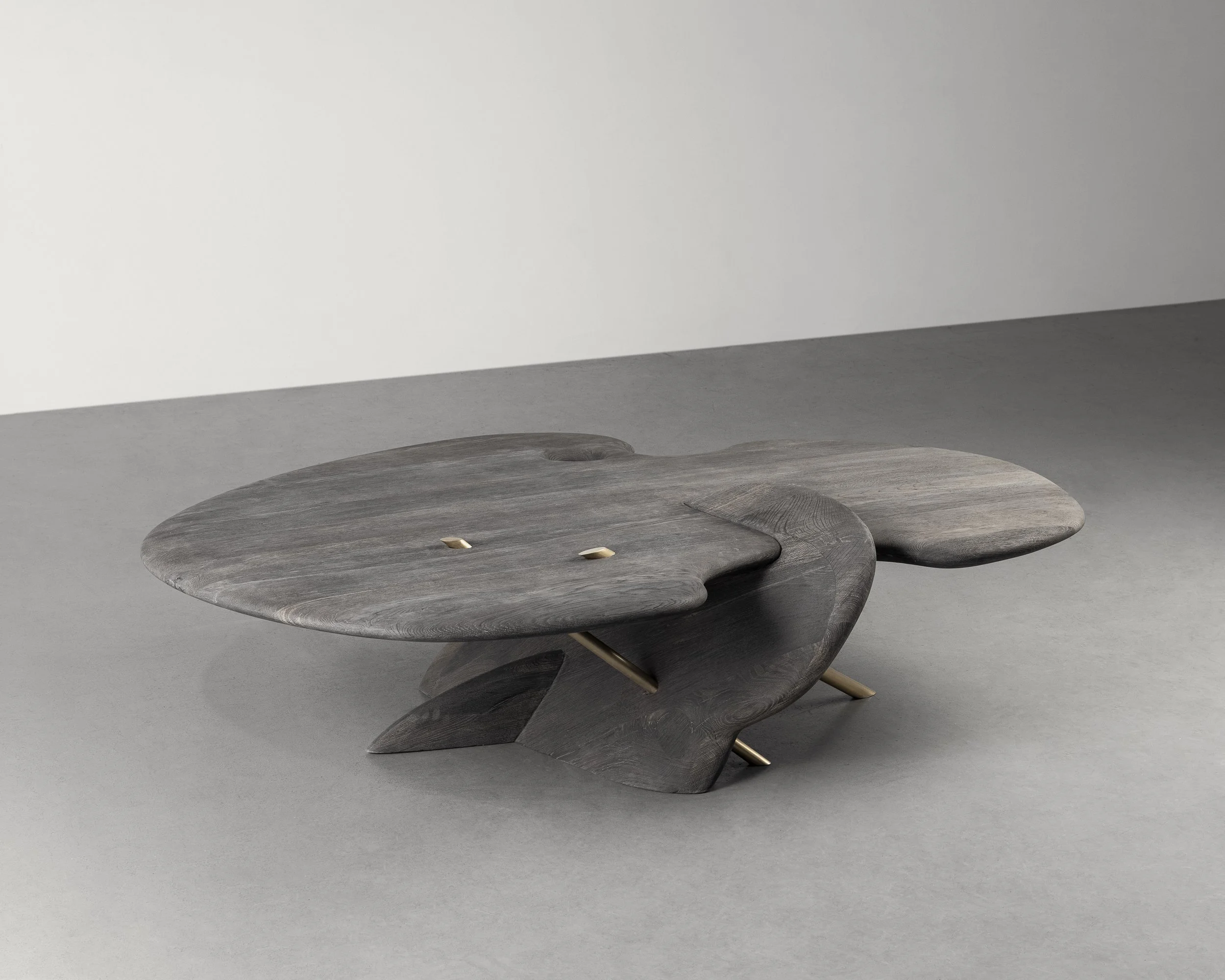
The Fuse collection grew out of a deliberate decision to move away from brief-led design and to establish a more open-ended process of experimentation as a means of generating both form and concept. This body of work began as a thought experiment; considering the various structures that could be assembled by fusing pebble-shaped forms together, as if they had partially passed through each other and fused in place to create an oblique structure with multiple regions of intersection.
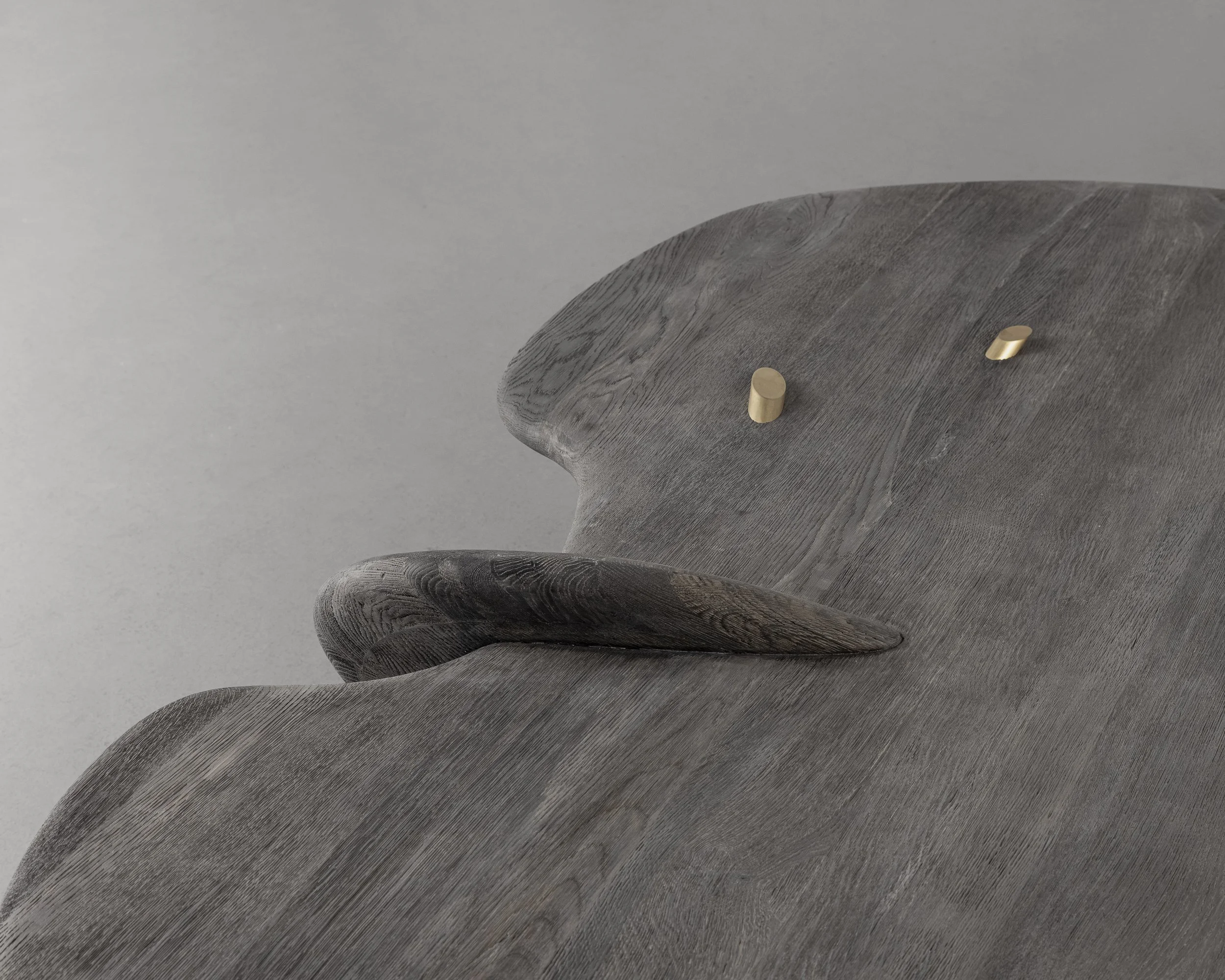
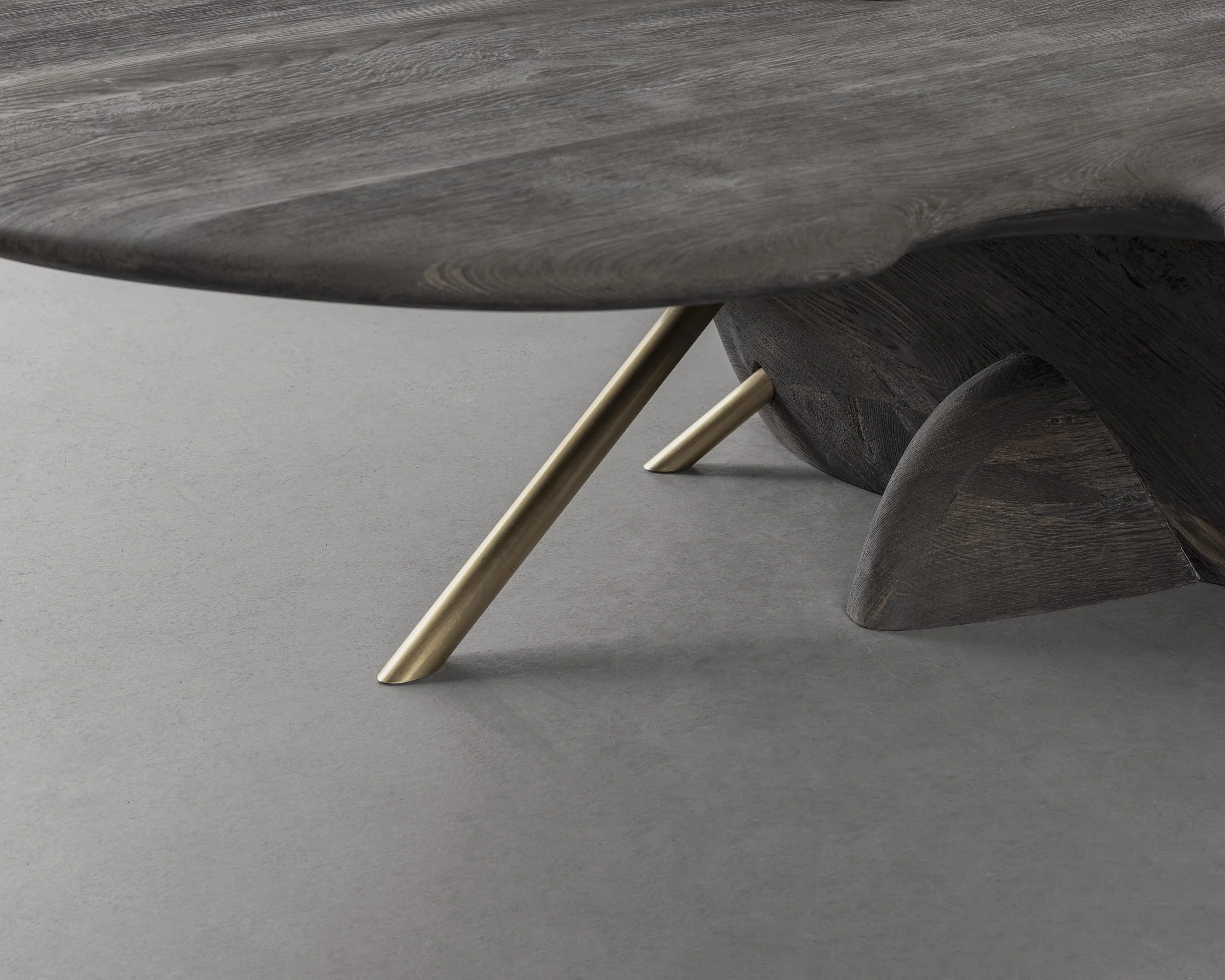
As with almost every project I develop, the concept was explored through modelmaking, sculpting forms out of clay and then cutting away the intersections to allow them to coalesce. Initially, the steel pins used only to hold the forms in place acted only as a practical modelling aid, enabling a fast and spontaneous approach. Over time, however, these pragmatic interventions later became so integral that they were replicated in some of the final works in the form of large brass pins used to lock the stone elements together – a deliberate reference back to the importance of the modelmaking process as a formative stage of development.
The more practical aspects of the process were tempered aesthetically by experiential references — coastal erosion and the manner in which discrete forms gradually coalesce as they wear away at points of contact, the large piled granite formations common across Australian landscapes, and childhood memories of the way these massive formations compel interaction; to climb, explore, to find a place to sit amongst the giant boulders. Personal experience also inspired the development of production and assembly techniques, in this instance a childhood fascination with complex wooden puzzles that rely on a single assembly solution to become self-locking in their final form that informed the aesthetic direction and the approach to assembly.
Technically, this was one of the most challenging the studio has undertaken due to the complex geometries required to enable the various stone elements to seamlessly slide into place. Flat-sided slotted forms slide together easily, even at oblique angles. Achieving a seamless assembly of three-dimensionally curved forms requires every element to be sculpted to sub-millimetre accuracy, with the gradients and local minima and maxima positioned precisely at the correct point along each intersection. From an aesthetic perspective this required an iterative sculpting process to ensure that the technical requirements for the positioning of the jointing surfaces were incorporated in such a way that the curvature of the forms appears natural with no visible evidence of the geometric constraints governing assembly.
This project therefore melds many different aspects of my practice; hands-on modelmaking and experimentation, careful and considered sculpting, personal experience and observation, and rigorous technical development and production management problem solving, all brought together in the service of creating deceptively simple and elegant sculptural works.