
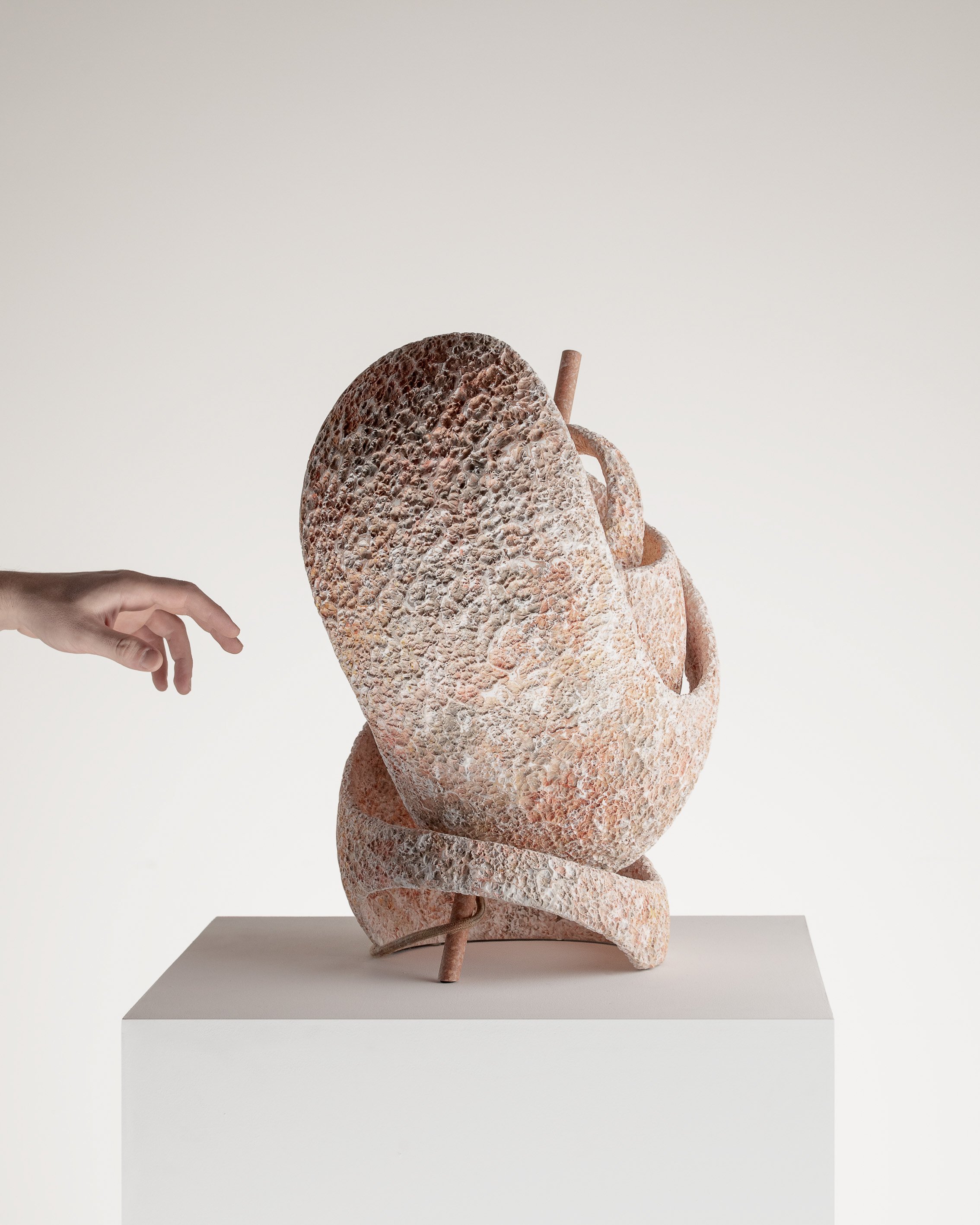
Gyre I
2023
Resin, Sand, Patinated Bronze, Electrical Components
50 x 30 x 30 cm
19 3/4 x 11 3/4 x 11 3/4 in
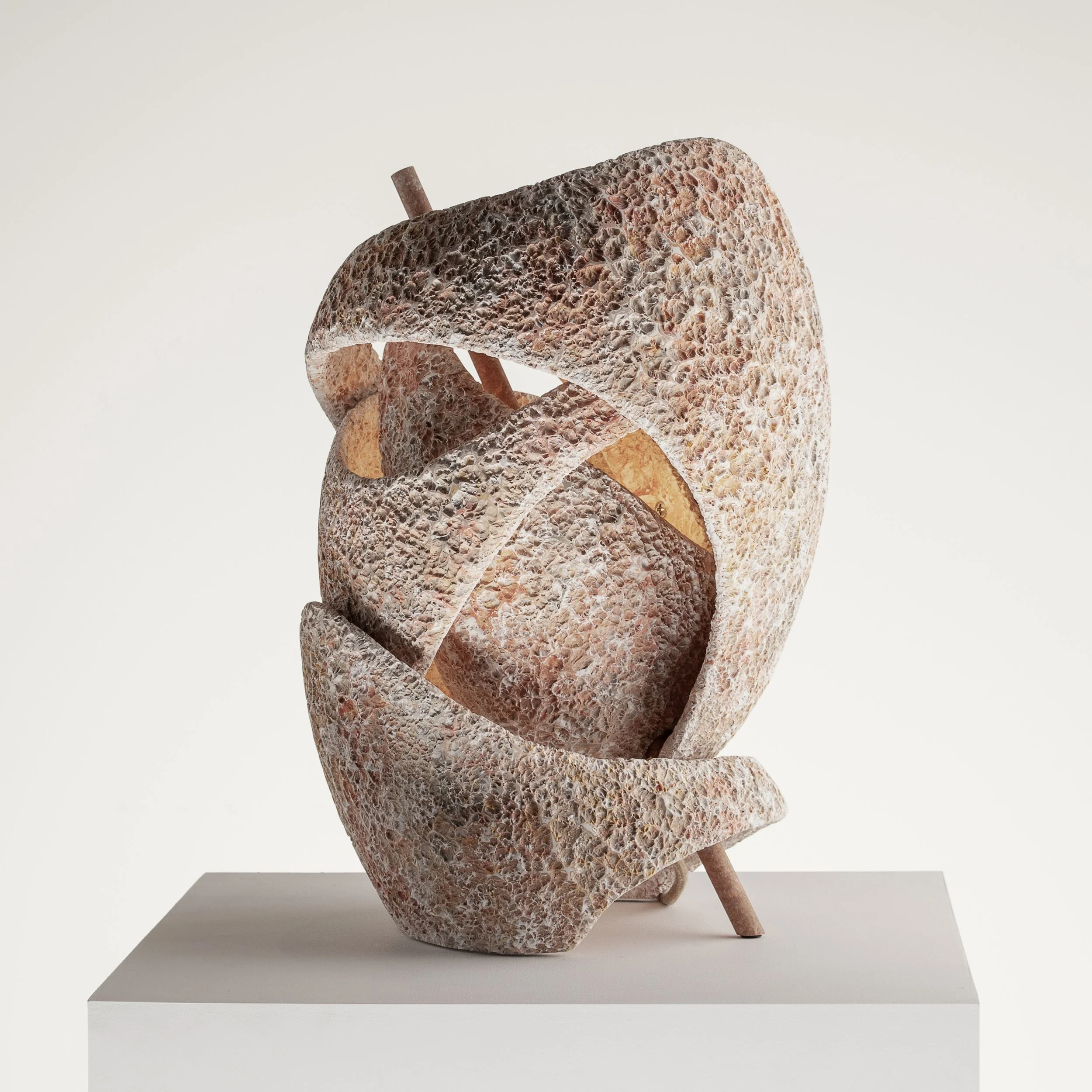
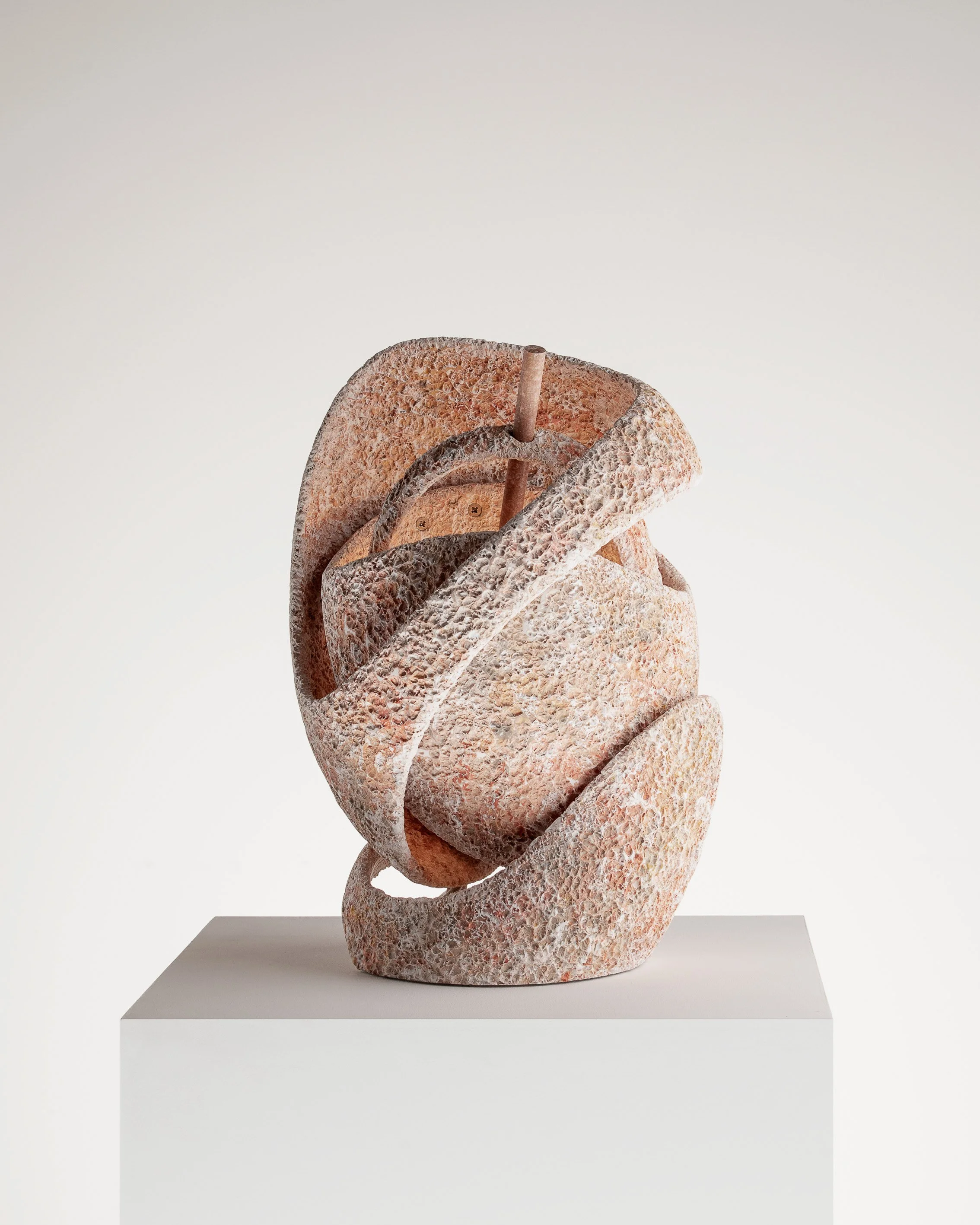
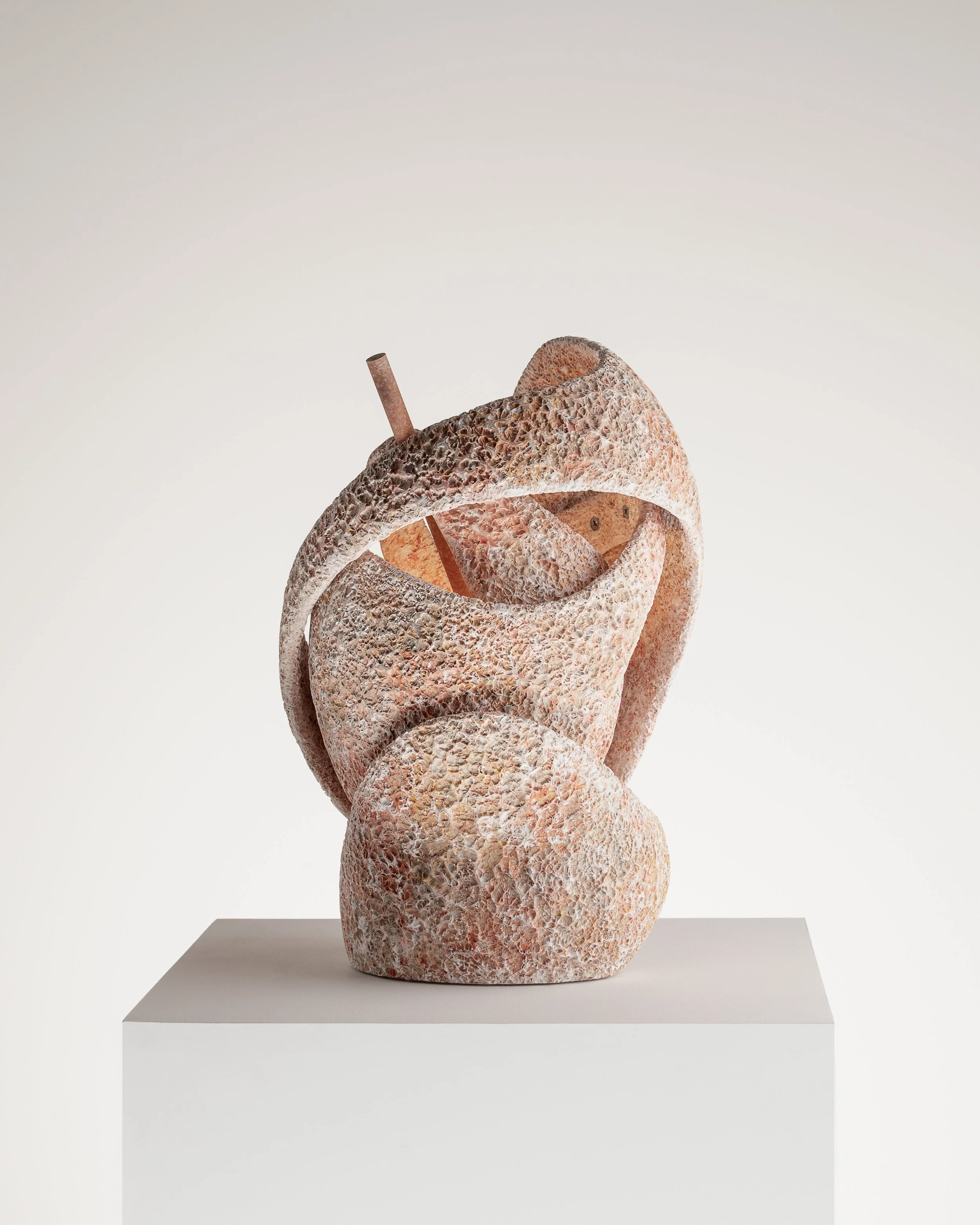
After working for much of my early career in a limited palette of materials, I have recently initiated a process of workbench-based investigation to produce works in which design intent is driven by material manipulation. The origin of this particular project was a long-standing desire to create work in which colour was integral to the sculpting process itself, rather than simply being a final aesthetic decision. I have therefore chosen to include Gyre as an example of work defined primarily by its materiality.
Having worked for many years in bronze, the intrinsic workflow of that medium separates the creative process into discrete phases: sculpting and texturing to create the sculptural forms, a production stage in which the forms are cast, and finally a patination process to visually temper and colour the external surface. Whilst the patina is always chosen complement the form and to emphasise detail, its position as a final stage is inherently superficial. In deliberate contrast to this long-standing approach, the process developed for the Gyre range transfers application of pigmentation into the working phase of fabrication, melding decisions over form, texture and colour into one unified process that allows for far greater spontaneity in the way in which these characteristics interact.
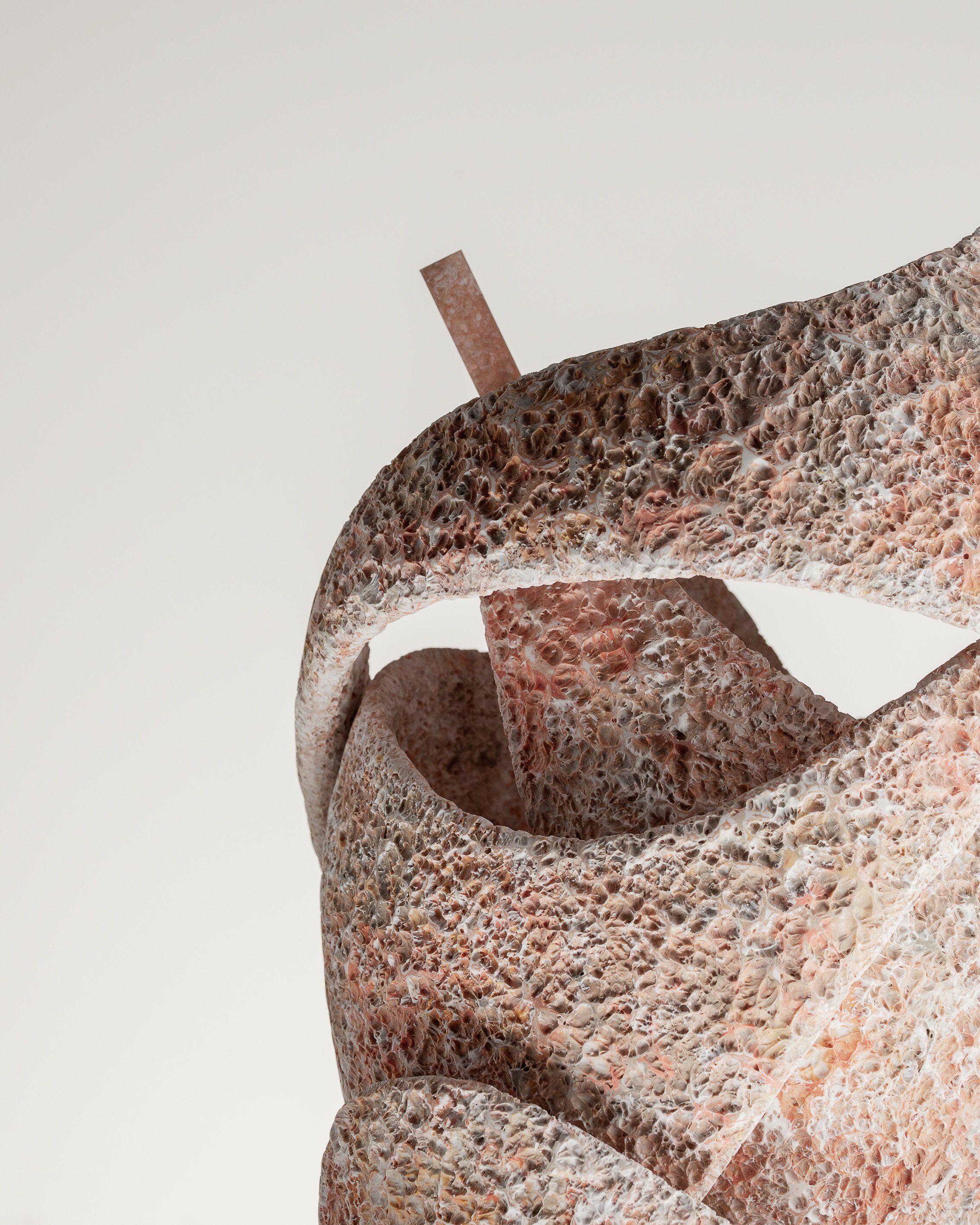
The specific character of the work derives from a process of material investigation in which the consistency and viscosity of epoxy resin was adjusted, through numerous tests, to the point where a material ordinarily used for casting could instead be sculpted – applied by hand layer by layer to accrete both texture and form. This multi-layer approach enables the gradual build-up of a deeply worked surface while also allowing colour to be embedded throughout the fabrication process in a way that creates complex stratigraphic variations in hue. The dozen or more colours specific to each work are drawn from personal experience: photographs taken in various locations are analysed for colour, with multiple tones drawn from different points across the image are combined into complementary palettes that are then re-created in the pigmented resin layers.
Having established a material process, the next step was to consider how best to utilise this technique. As the application of this material is a highly intensive process that requires clear access to build, sculpt, sand and finish every part of the surface, practical considerations dictated that the forms could not be overly complex. The design process therefore involved experimentation with simple geometric forms that highlight the intricate textures whilst combining into a form with a distinct sculptural identity. A further constraint arose from using a fully opaque material for a lighting piece: the design of the forms needed to incorporate openings through which the light could escape. What emerged was a series of simple concentric shells, 3D printed in resin and sand, that are arranged in obliquely concentric shells in order to bounce the light around between them, creating subtle gradients and shadowing that shift as the viewing position changes. On each shell, the thickened pigmented epoxy is built up across many days in multiple layers to develop a surface patina in which colour and texture become inseparable — cutting back the final surface reveals a highly detailed filigree of hues that is unique to each individual work.